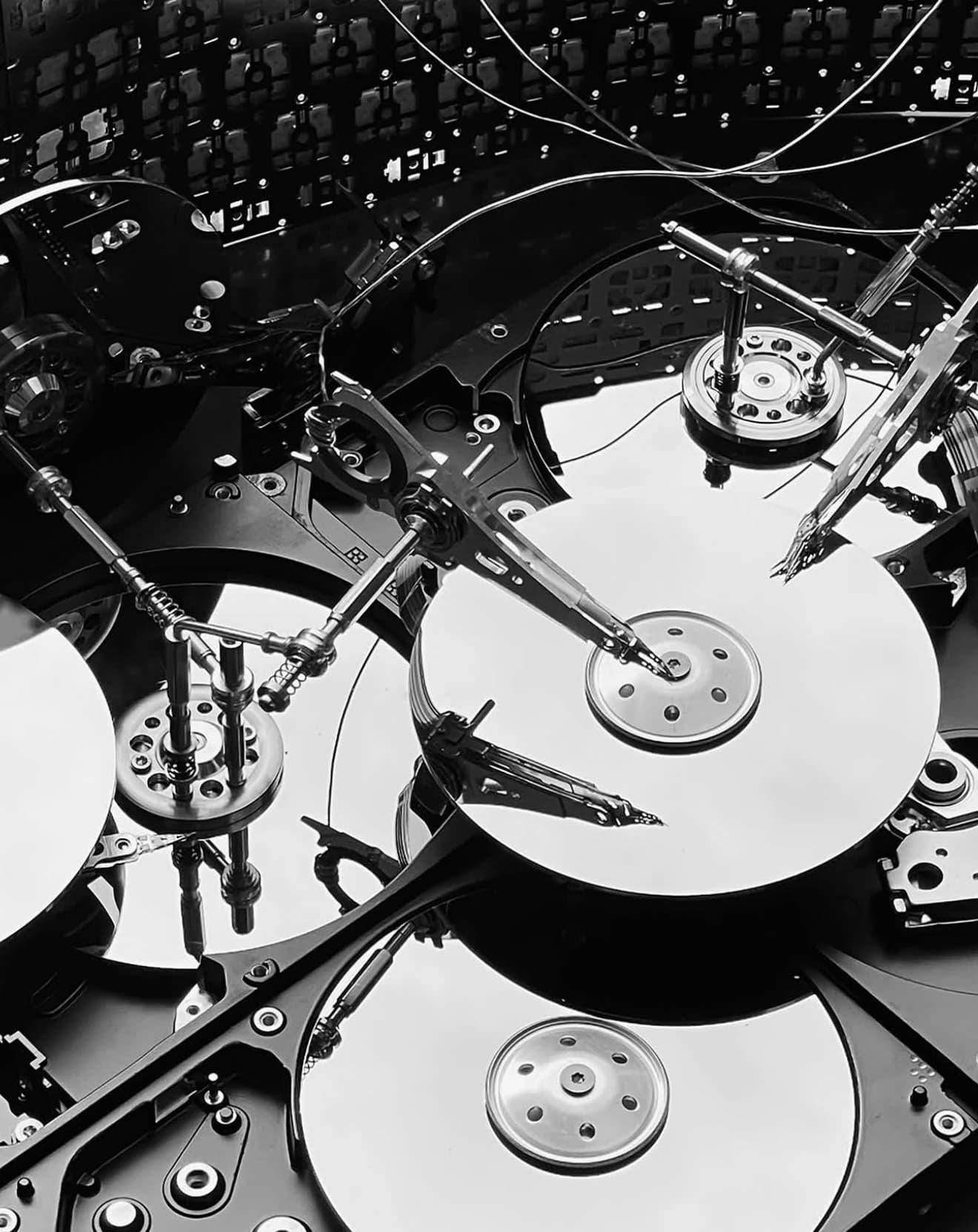
DataDemocracy
The data center zone holds the archives of many museums at once — not as a vault, but as a working system for input, storage, computation, and release.
We digitize those collections for open-source access in education and research: the act of retrieval. The workflow itself is on display, alongside the history of digital data that made it possible.
An inquiry into the accessibility of data and knowledge in the modern era — how architecture can serve the storage and transmission of human heritage.
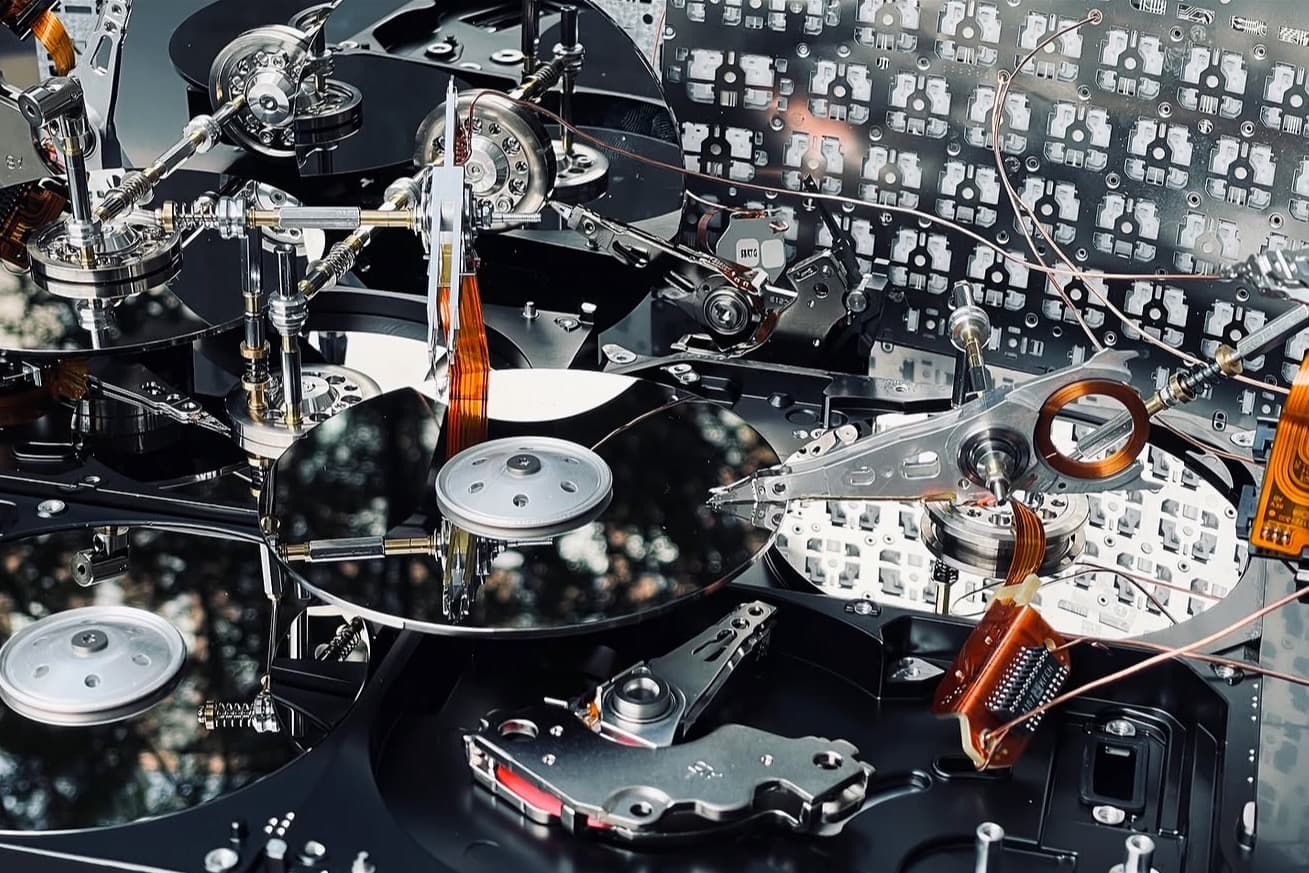
Recording as a spatial act: information is collected, indexed, and given physical presence.
The data center zone is a database of the physical archives of multiple museums — an agglomerate of infrastructures for input, storage, computation, and redistribution of useful digital data.
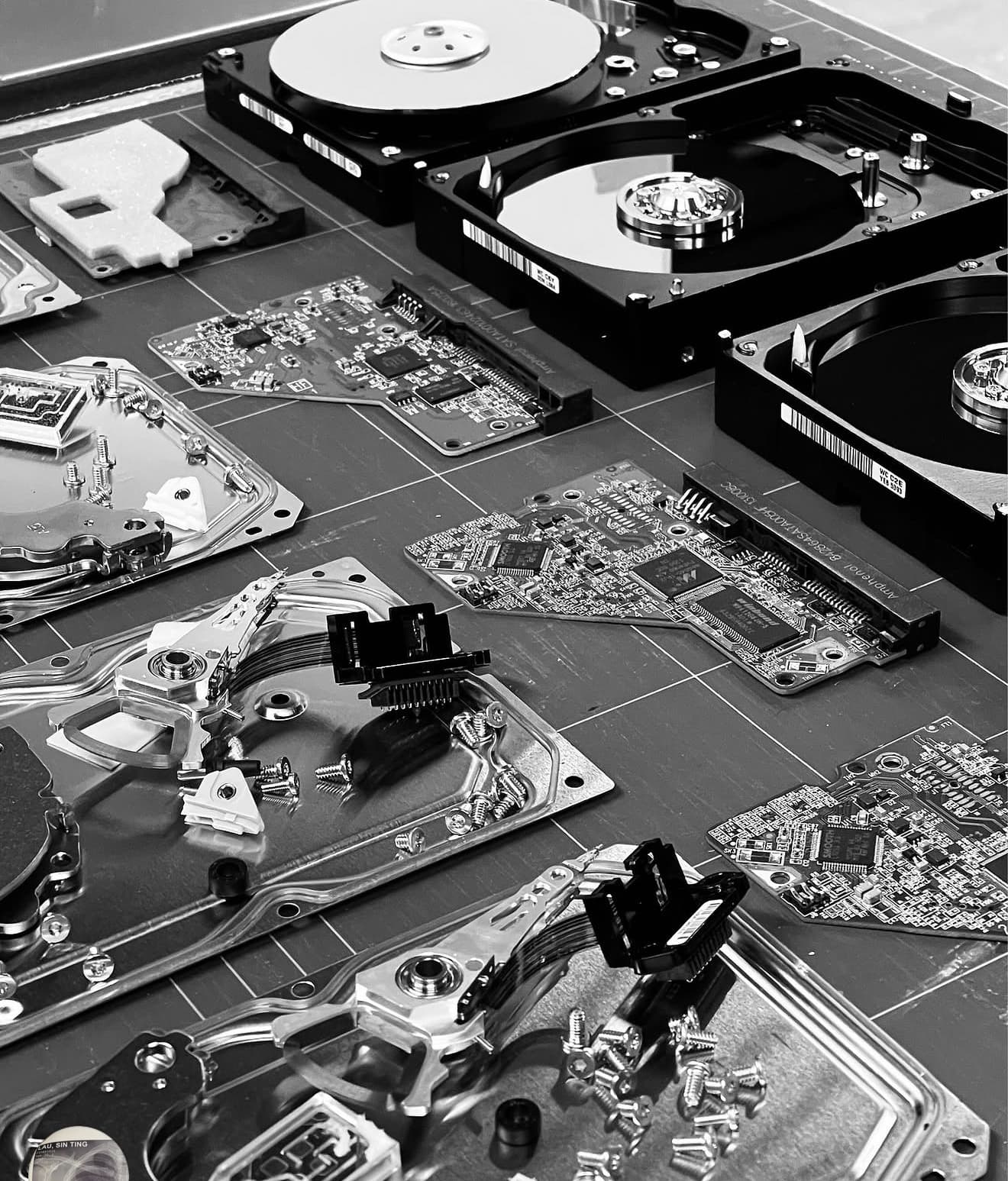
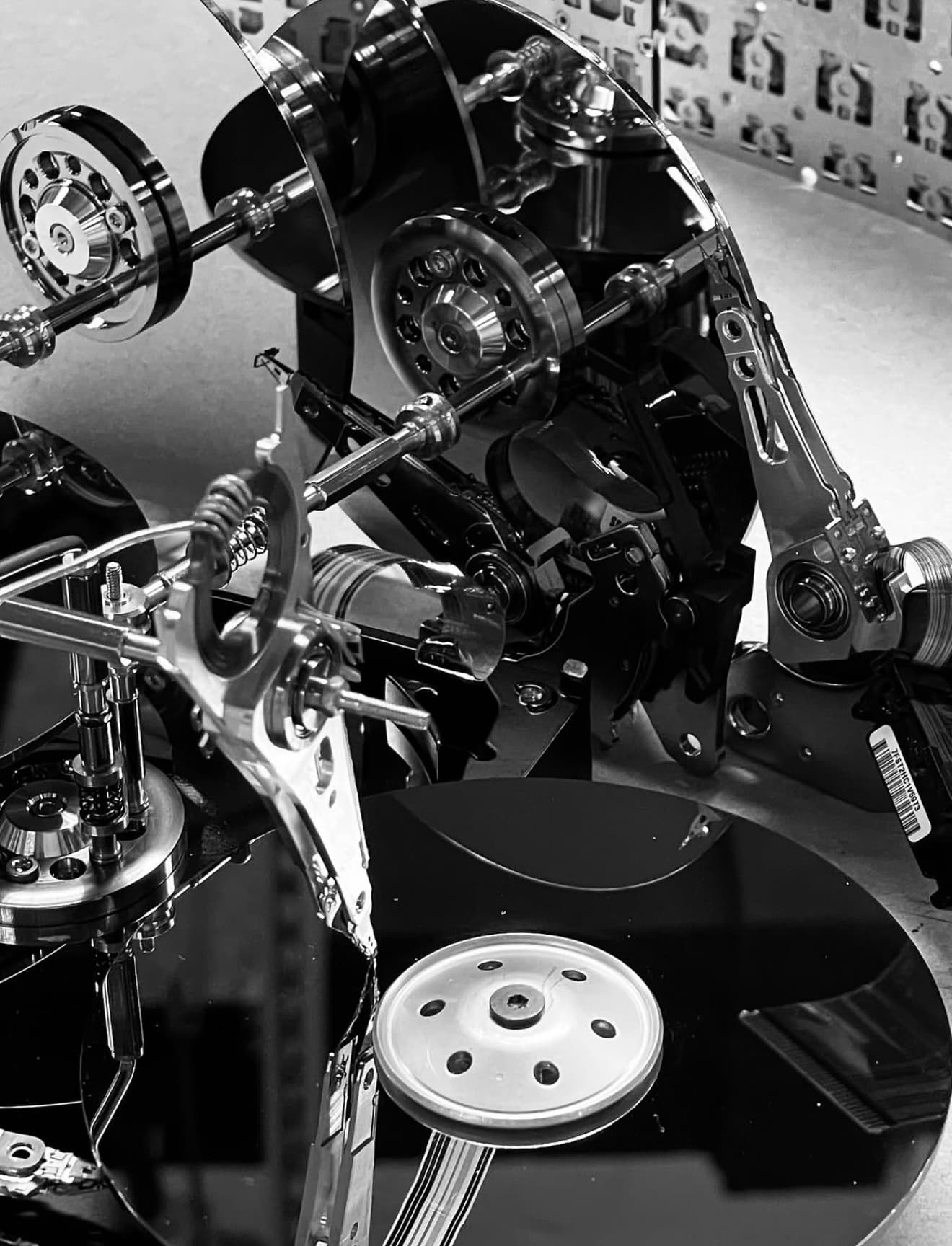
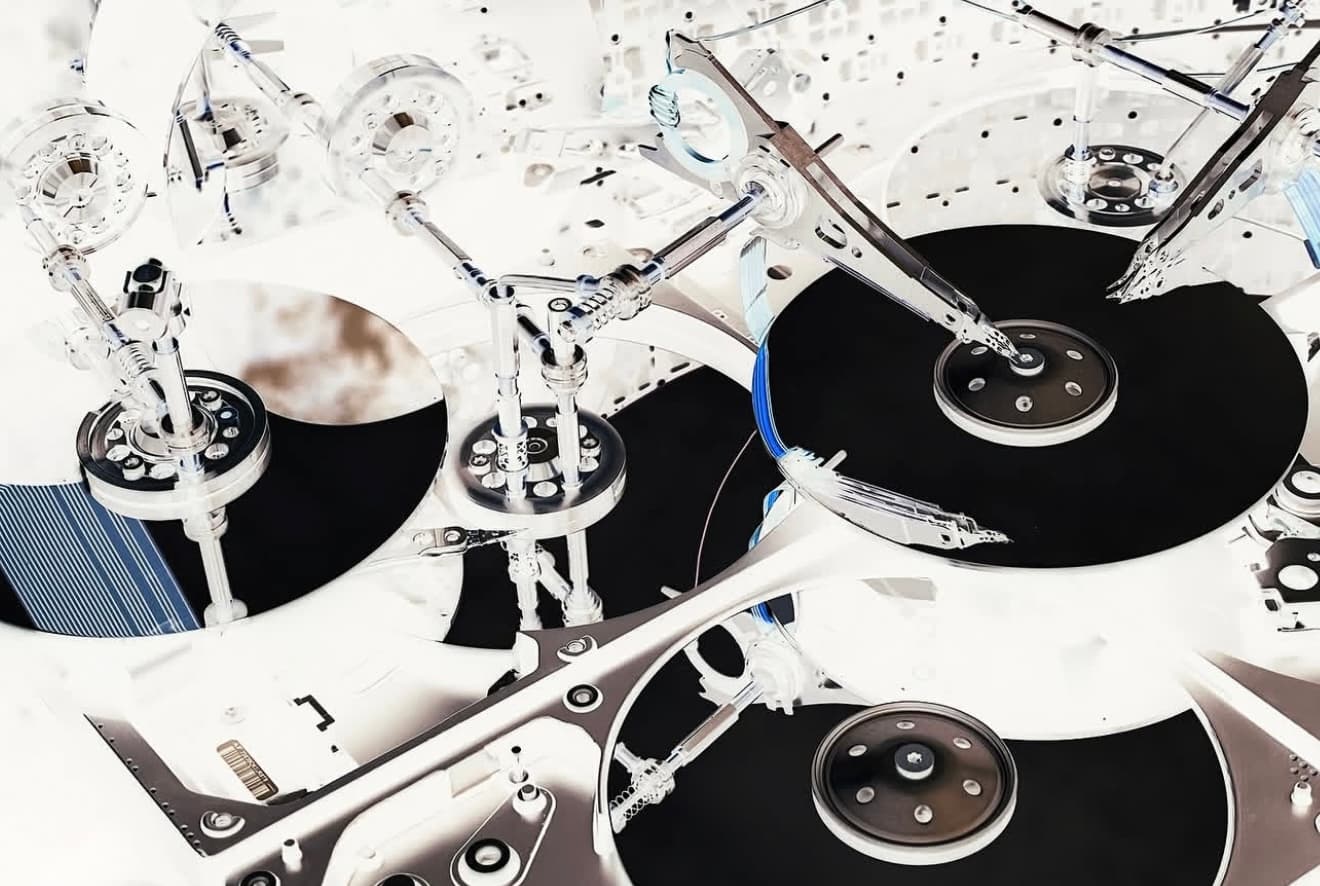
Repetition, density, and mechanical organization shape the atmosphere of the space.
Metal, found objects, and M2 screws hold the dismantled drives in ordered stacks — approx. 500 × 500 × 400 mm of working archive.
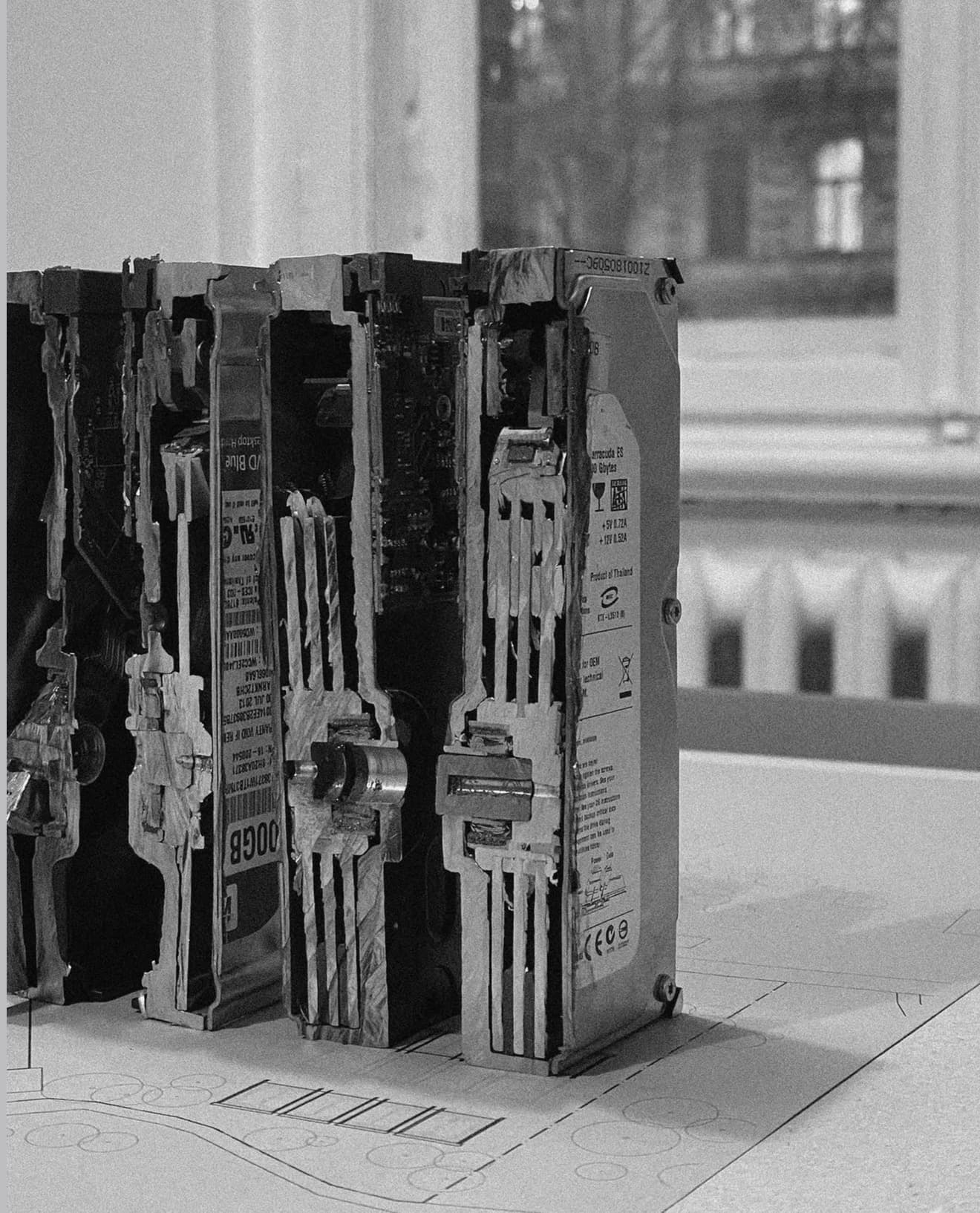
Sectioned drives stand on the master plan as archive volumes — the model as a stack of memory.
Storage becomesarchitecture.
Retrieval reconnects people with accumulated memory, revealing the relationship between bodies, machines, and information.
The museum zone displays the workflow of digitizing collections from other institutions, alongside the history and development of digital data — open-source access for education and research.