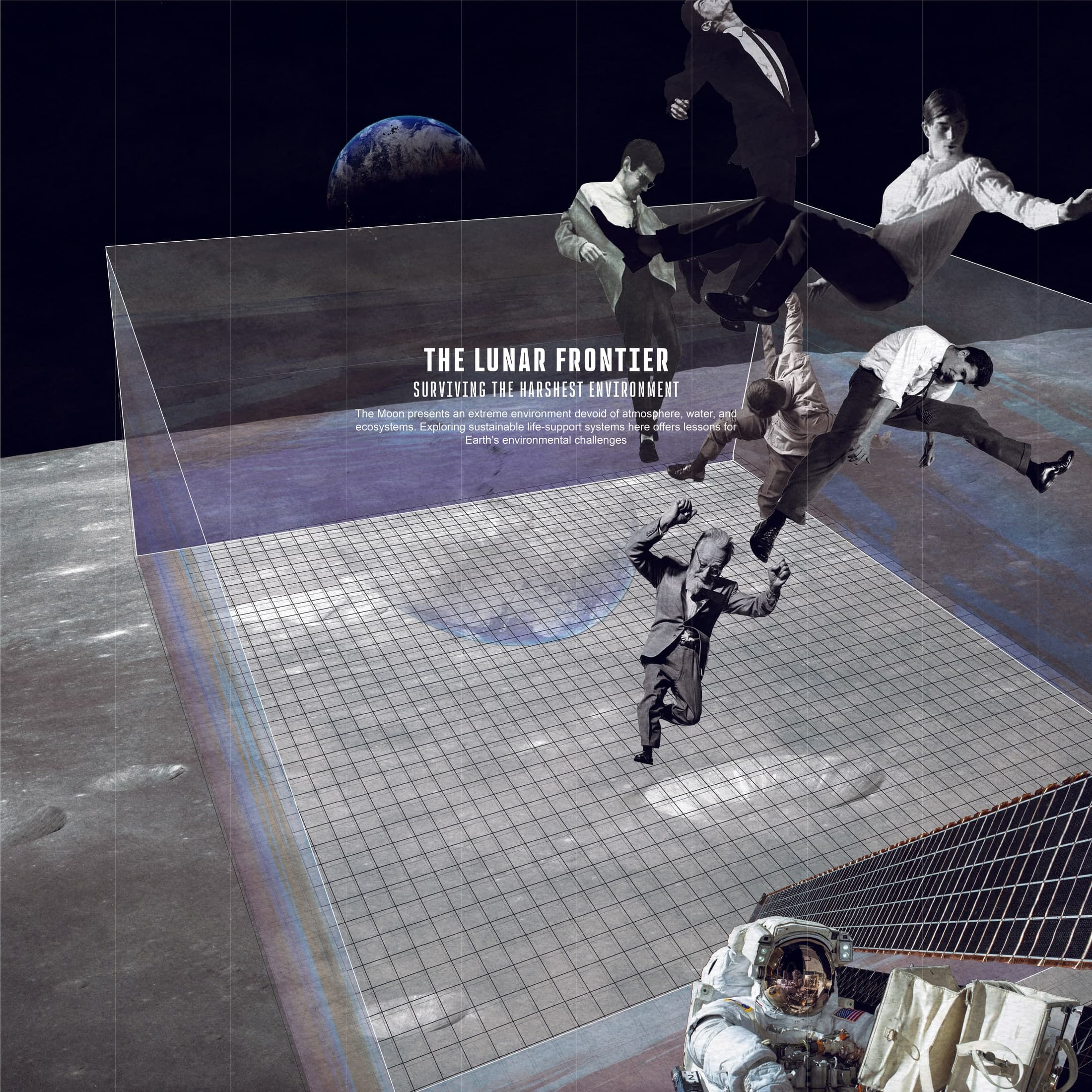
LunarFrontier
Lunar Frontier asks how architecture emerges when human life is displaced from Earth — beginning not with the image of a colony, but with the systems that make life possible.
The Earth is first deconstructed into fifty interconnected layers — climate, ecology, resources, infrastructure, urbanization — read not as separate conditions but as a network of dependencies.
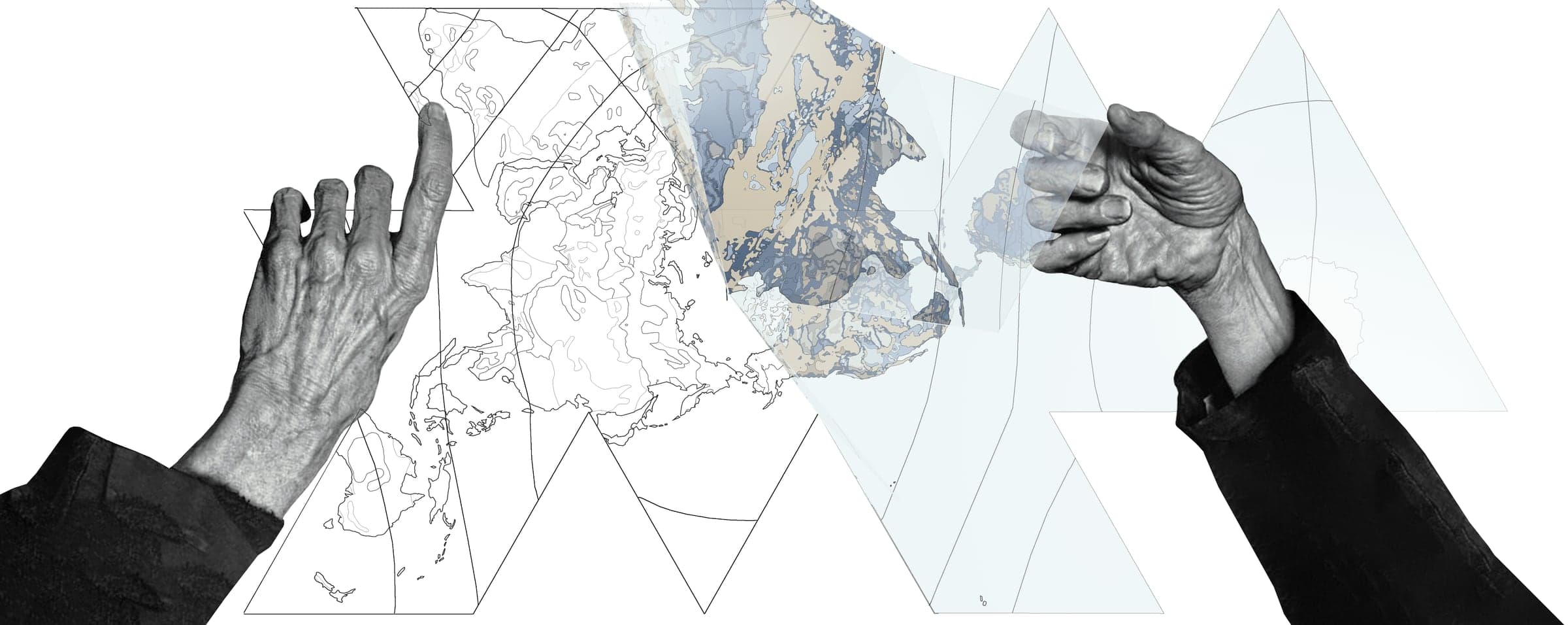
Folded onto Fuller's Dymaxion projection, distant geographies meet, systems overlap, and patterns invisible in conventional maps begin to emerge.
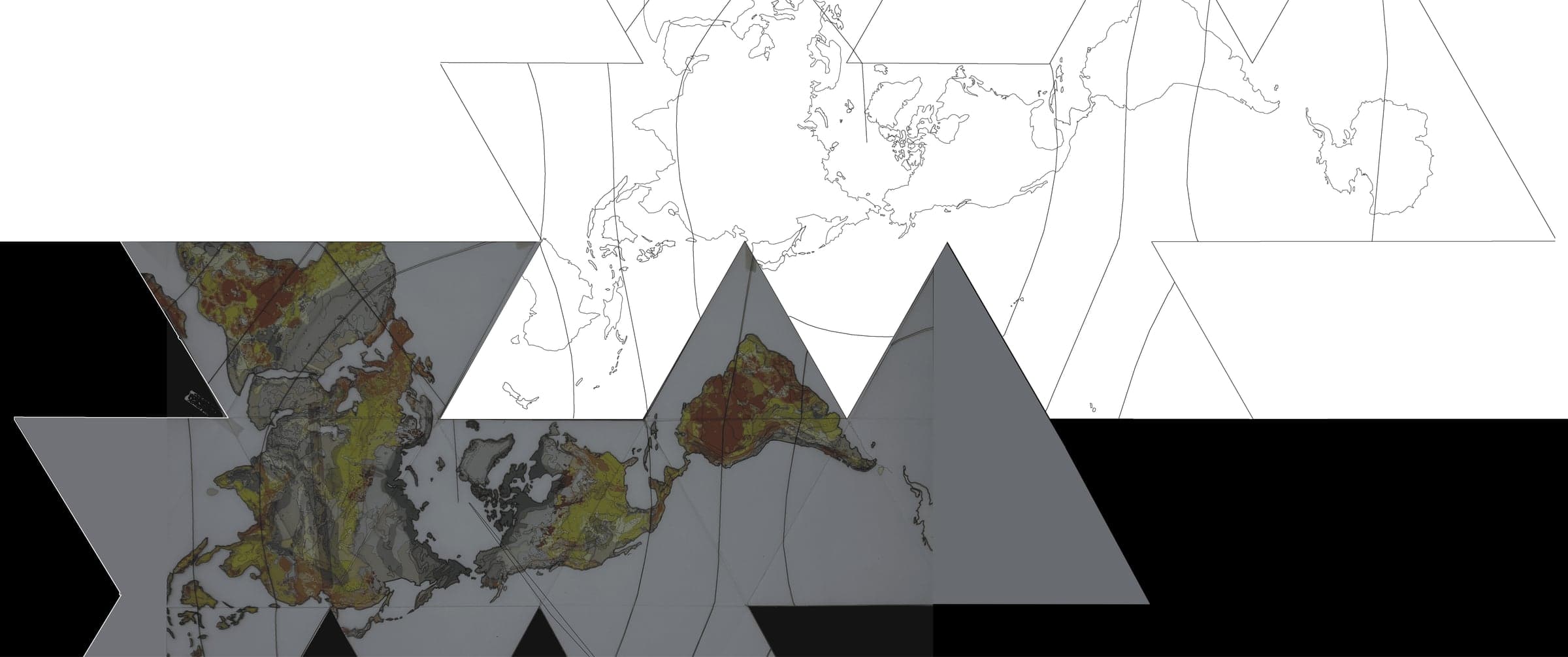
The Earth unfolded — data projected onto a modular twenty-triangle planetary framework.
Using Buckminster Fuller's Dymaxion Projection, the research develops a methodology of overlapping, folding, and reconfiguration: different conditions and territories are physically and conceptually brought into new relationships.
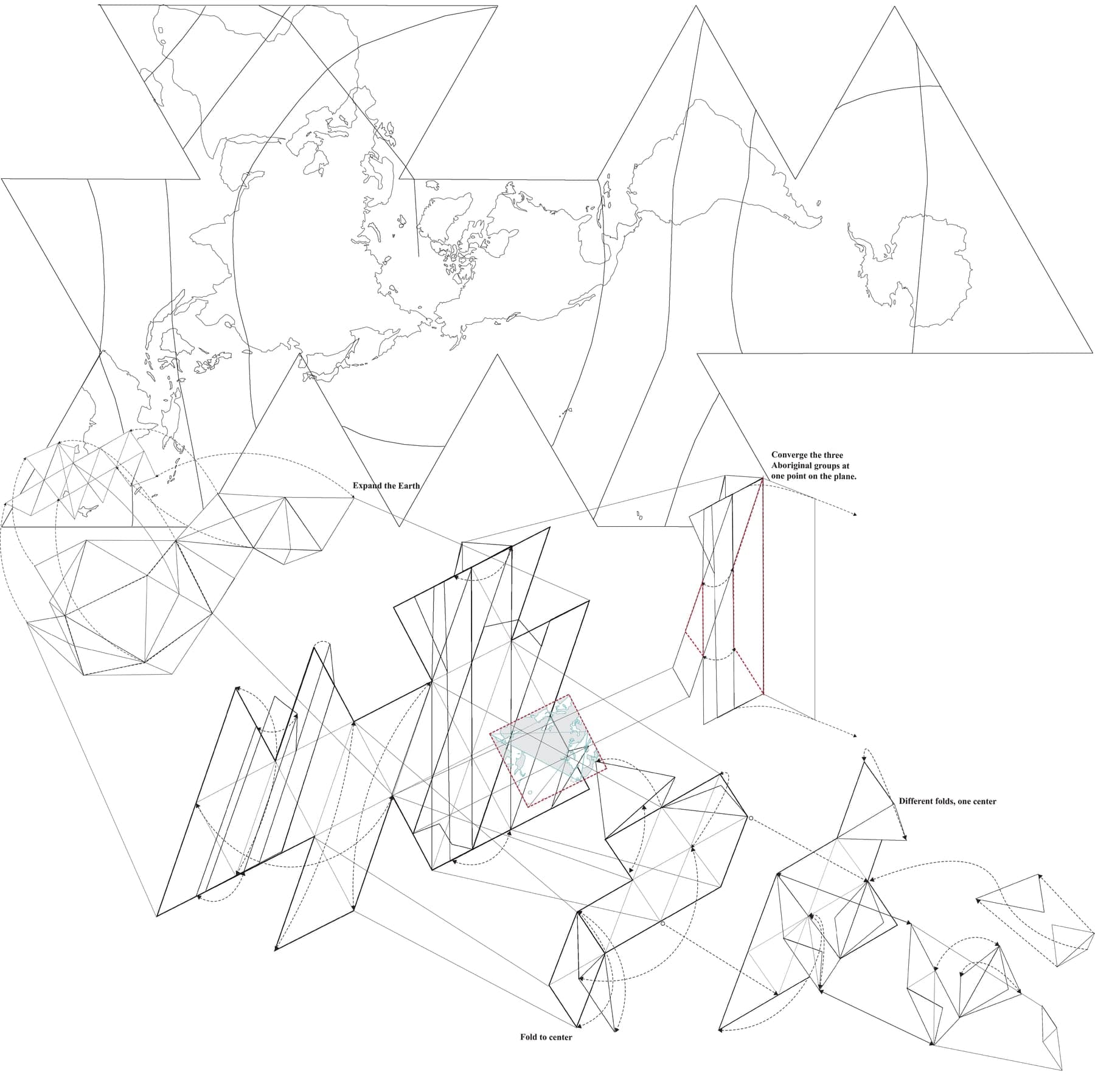
Folding as an analytical operation — expand the Earth, fold to center; different folds, one center.
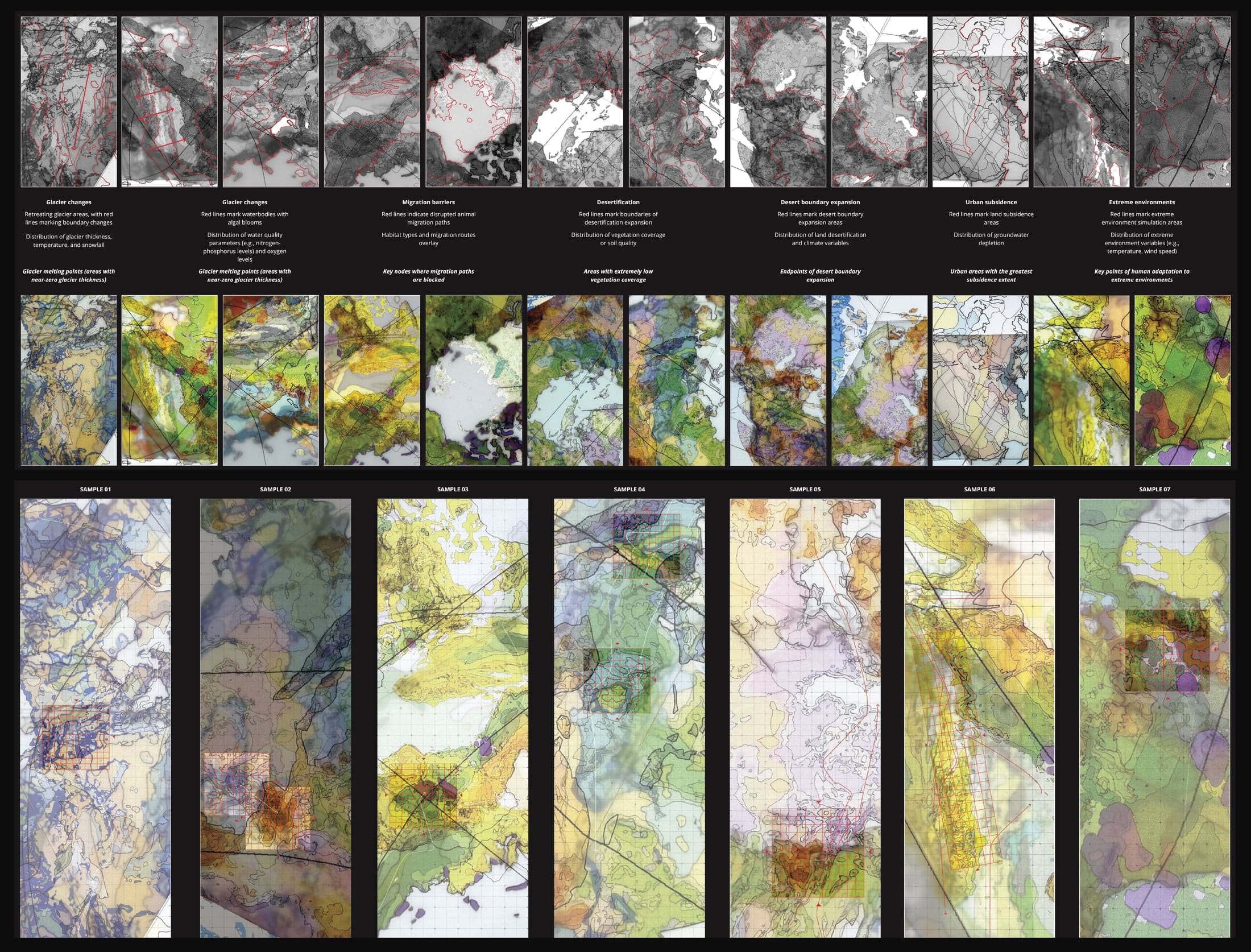
Fifty layers, seven samples — glacier change, migration barriers, desertification, subsidence, extreme environments.
Each sample stacks raw data, overlaid conditions, and a site extraction: environmental relationships translated into spatial questions that move between planetary, regional, and site scales.
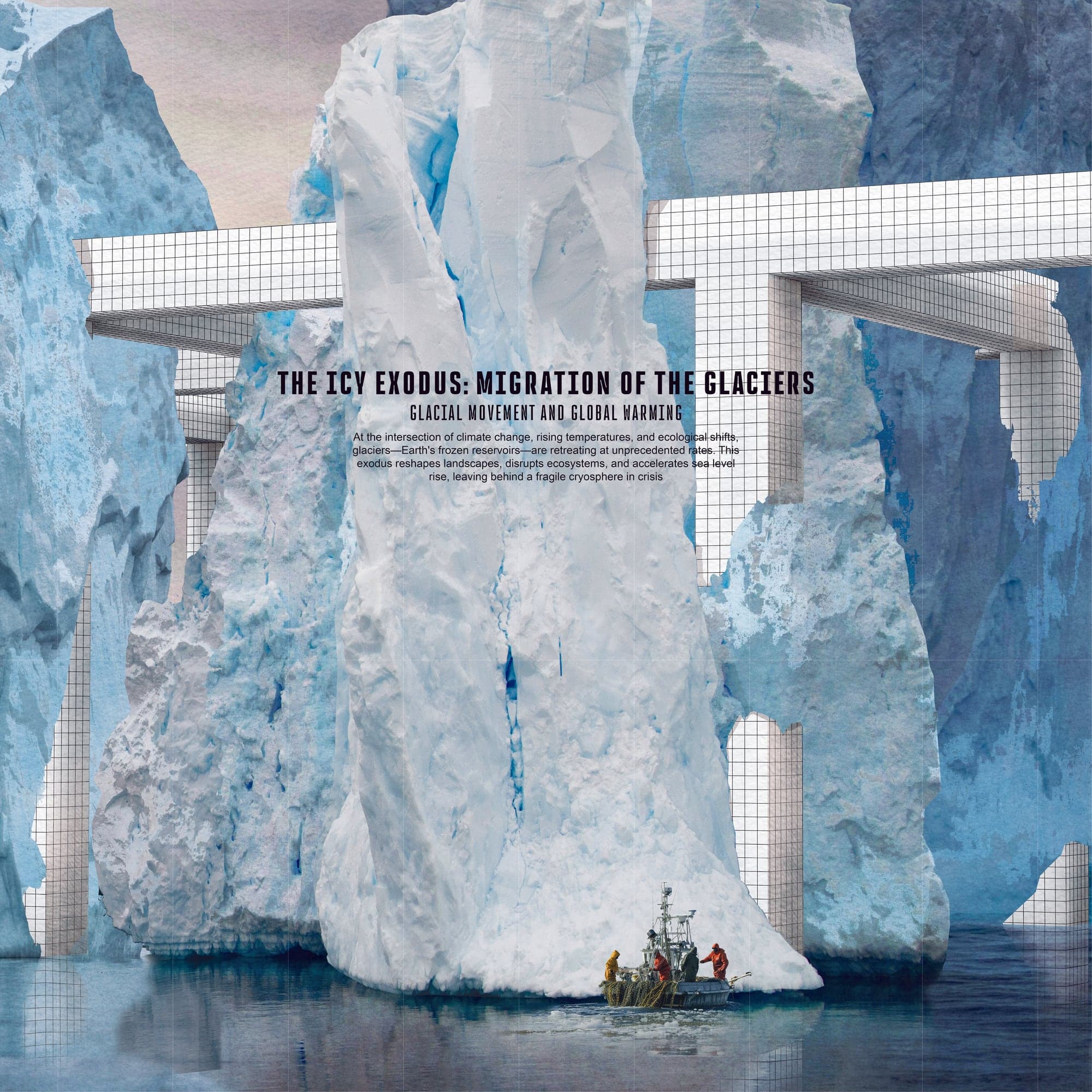
The Icy Exodus — glacial movement and global warming leave a fragile cryosphere in crisis.
From the framework, seven environmental scenarios investigate conditions ranging from glacial retreat and eutrophication to habitat fragmentation, desertification, groundwater depletion — and finally, human settlement on the Moon.
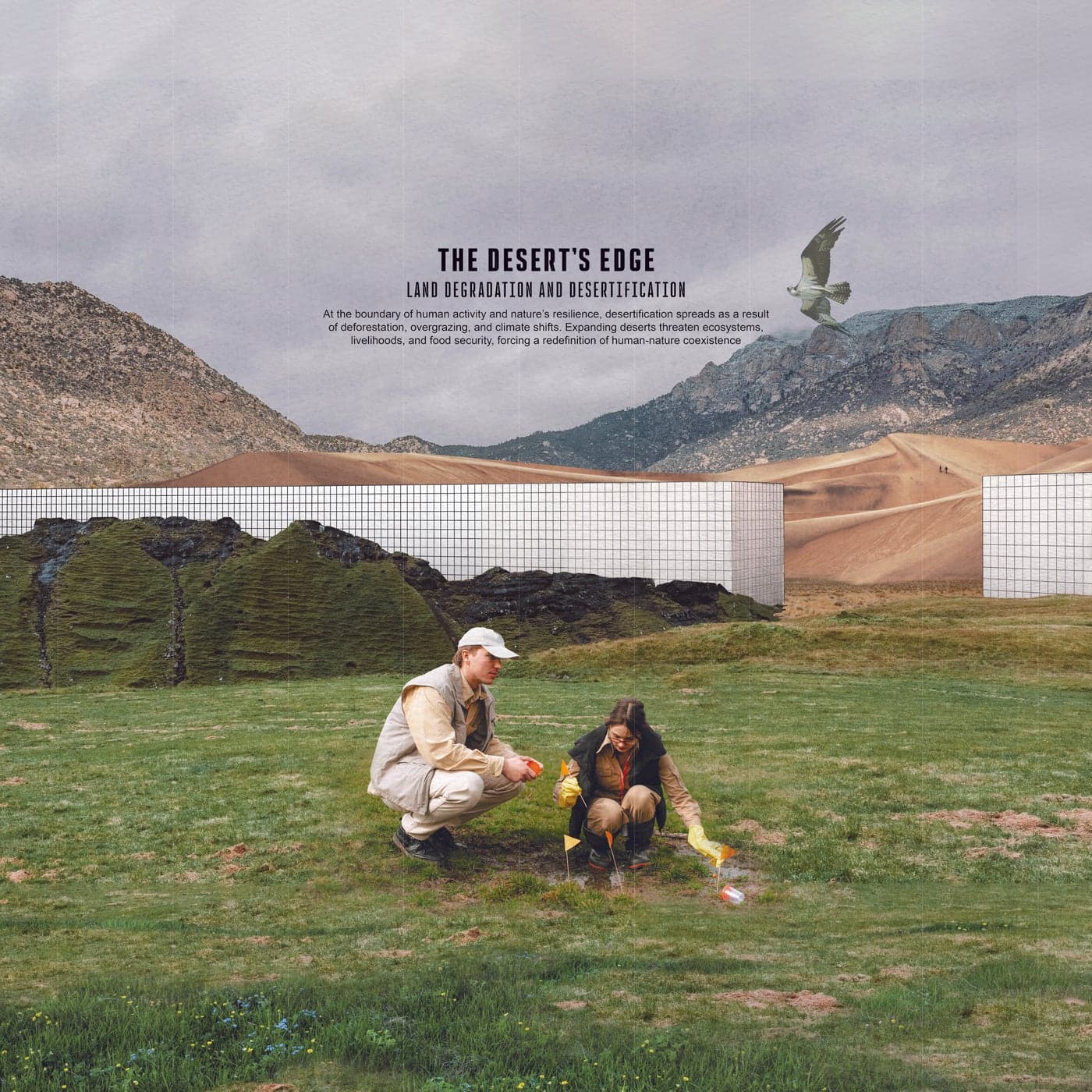
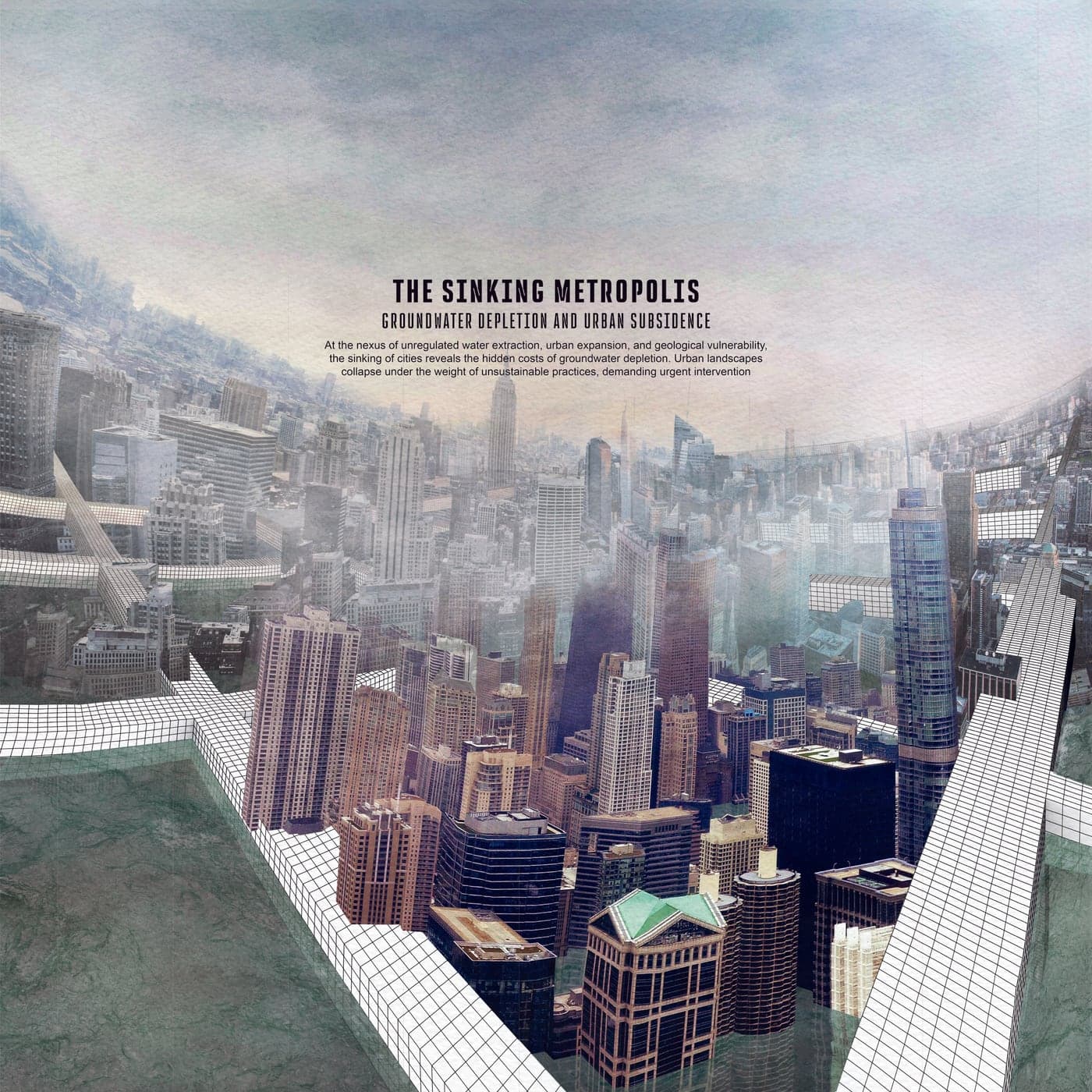
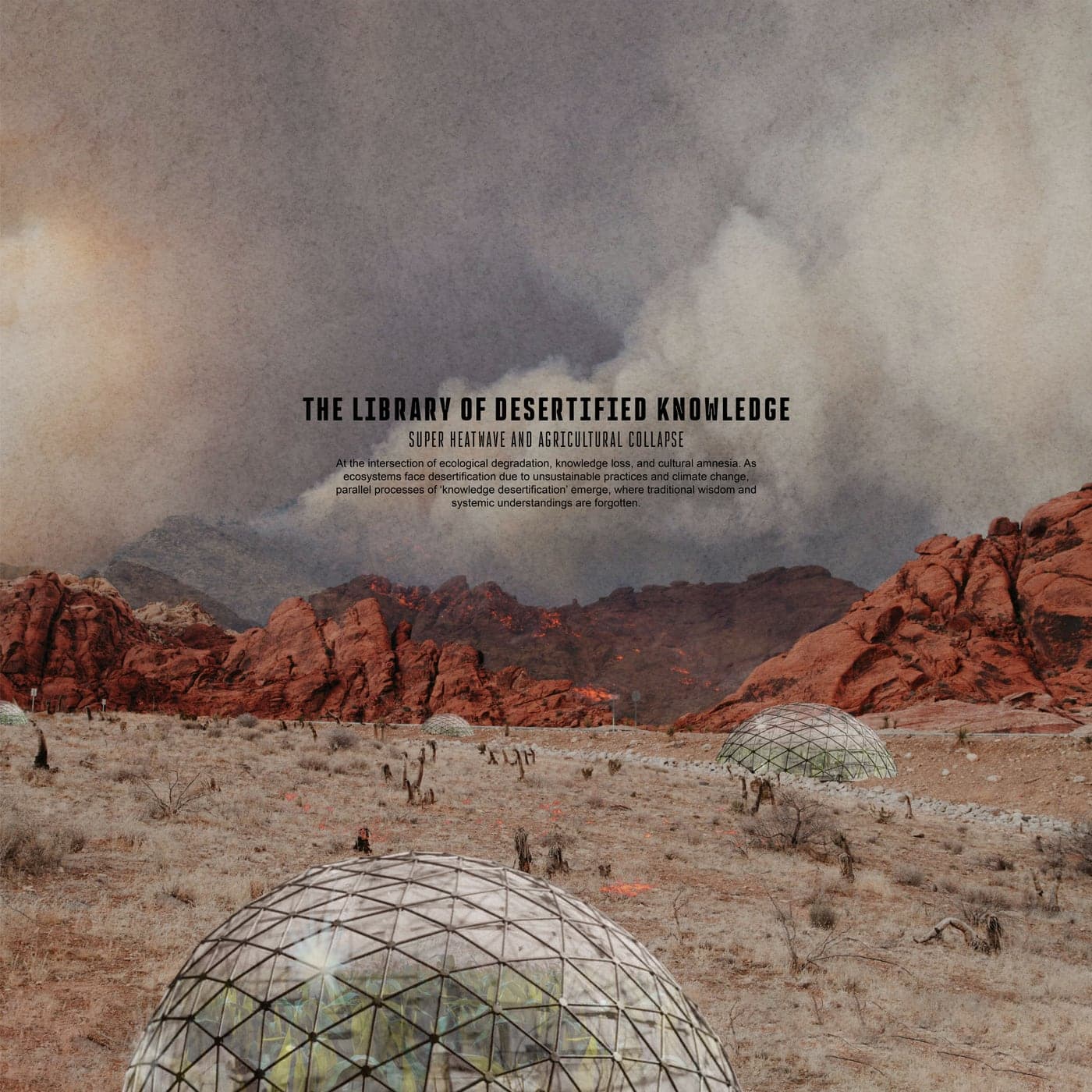
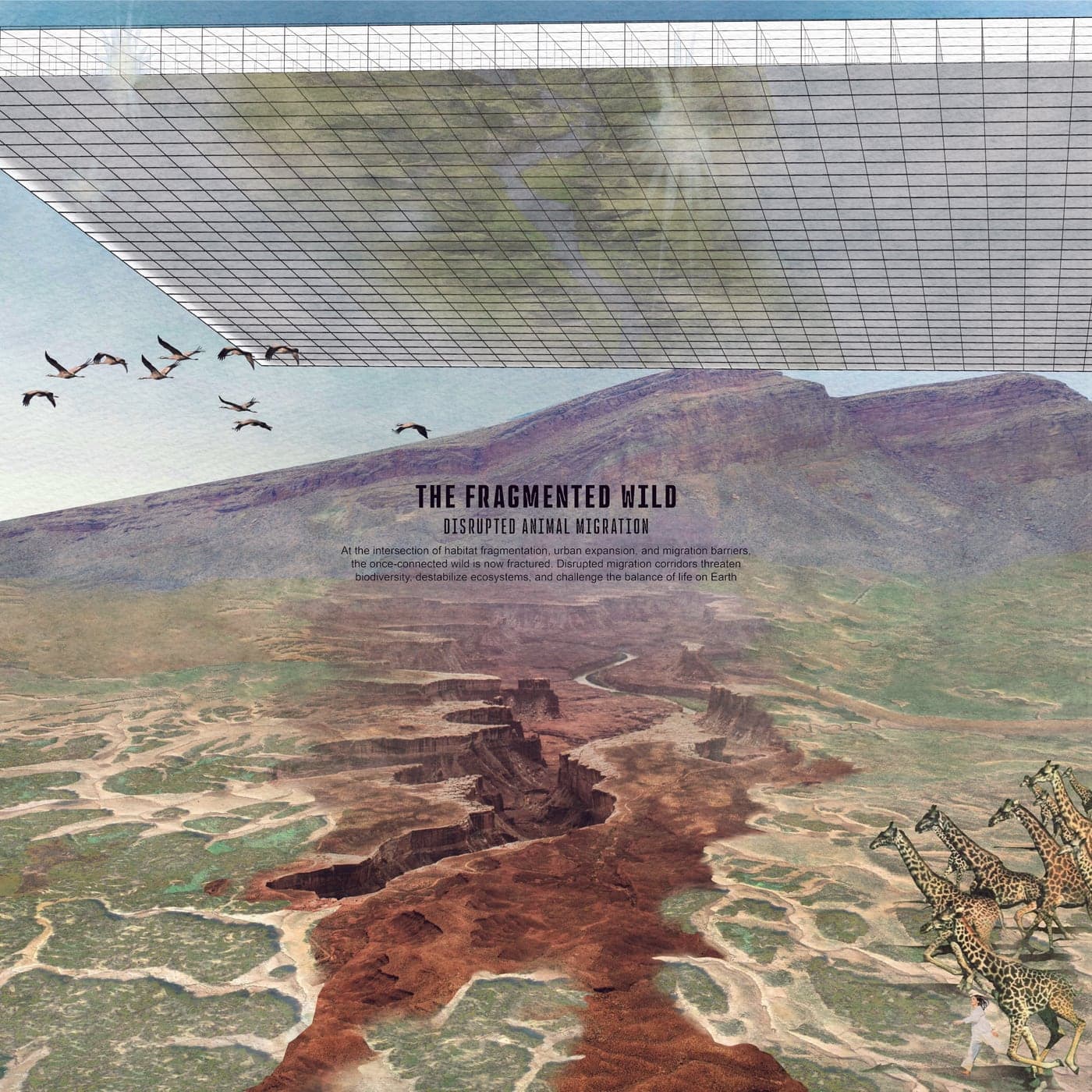
Each scenario moves between planetary, regional, and site scales — spatial questions, not predetermined forms.
A world is not designed from its surface.It is built from the systemsthat allow it to exist.
The framework's most extreme test — removed from every system that makes terrestrial life possible.
On the Moon, habitation can no longer be an isolated architectural object. Space must operate as infrastructure, environmental mediator, resource system, shelter, and life-support simultaneously — architecture emerges from necessity.
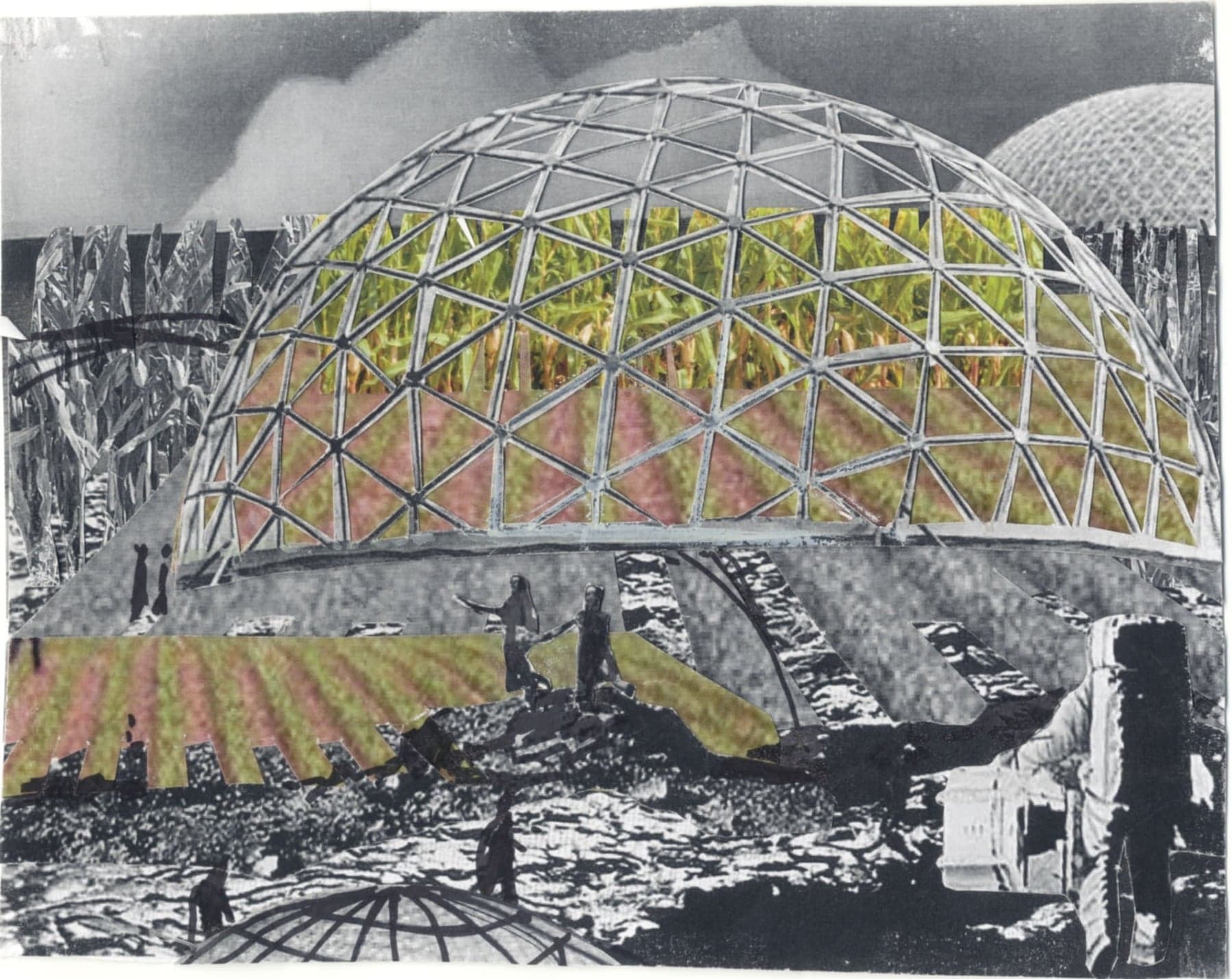
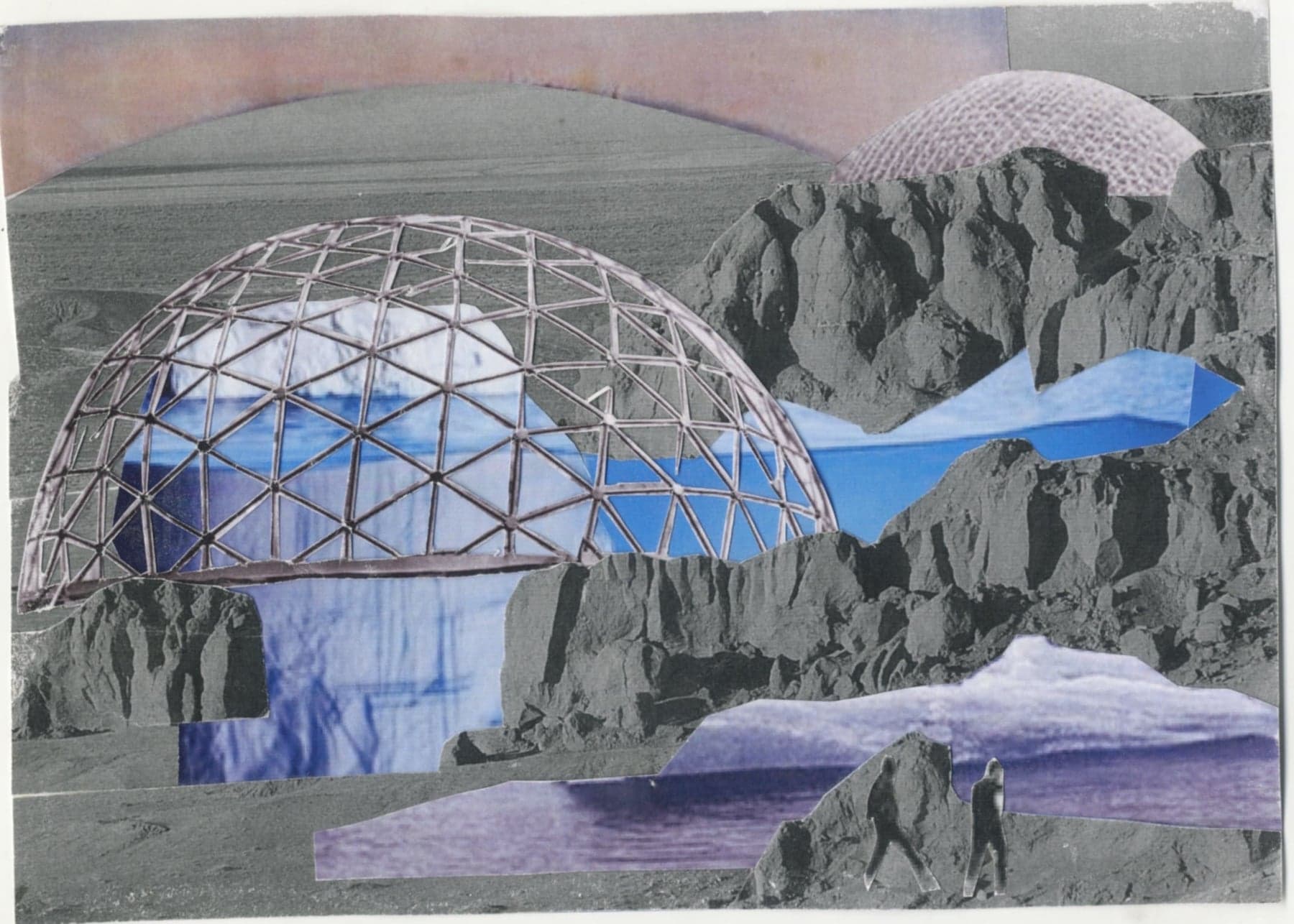
Not buildings placed on a surface — an interdependent spatial world.
Drawing on superstructure, modularity, abstraction, and minimized form, architecture becomes a flexible framework for changing environmental and human demands: circulation follows survival, enclosure responds to exposure, and inhabitation is inseparable from the systems that sustain it.