Para-siteRoom
Wind pushes. Fluid answers.
Scroll ↓Parasite: an analog mechanism installed onto an existing built environment, reconfiguring the room on wind and pressure alone.
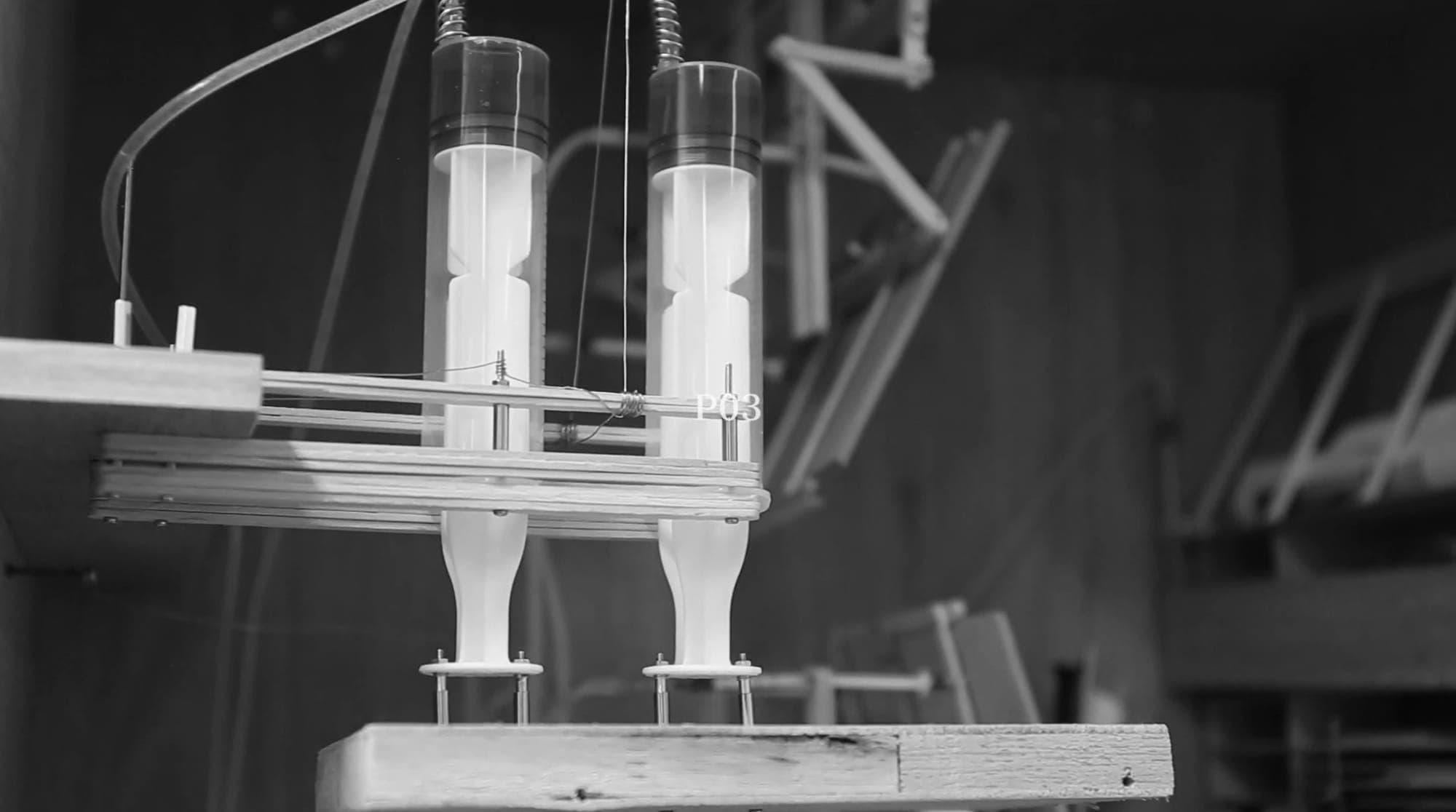
Two syringes joined by tubing form a pneumatic circuit. It carries energy captured across the space and releases it where it was never collected.
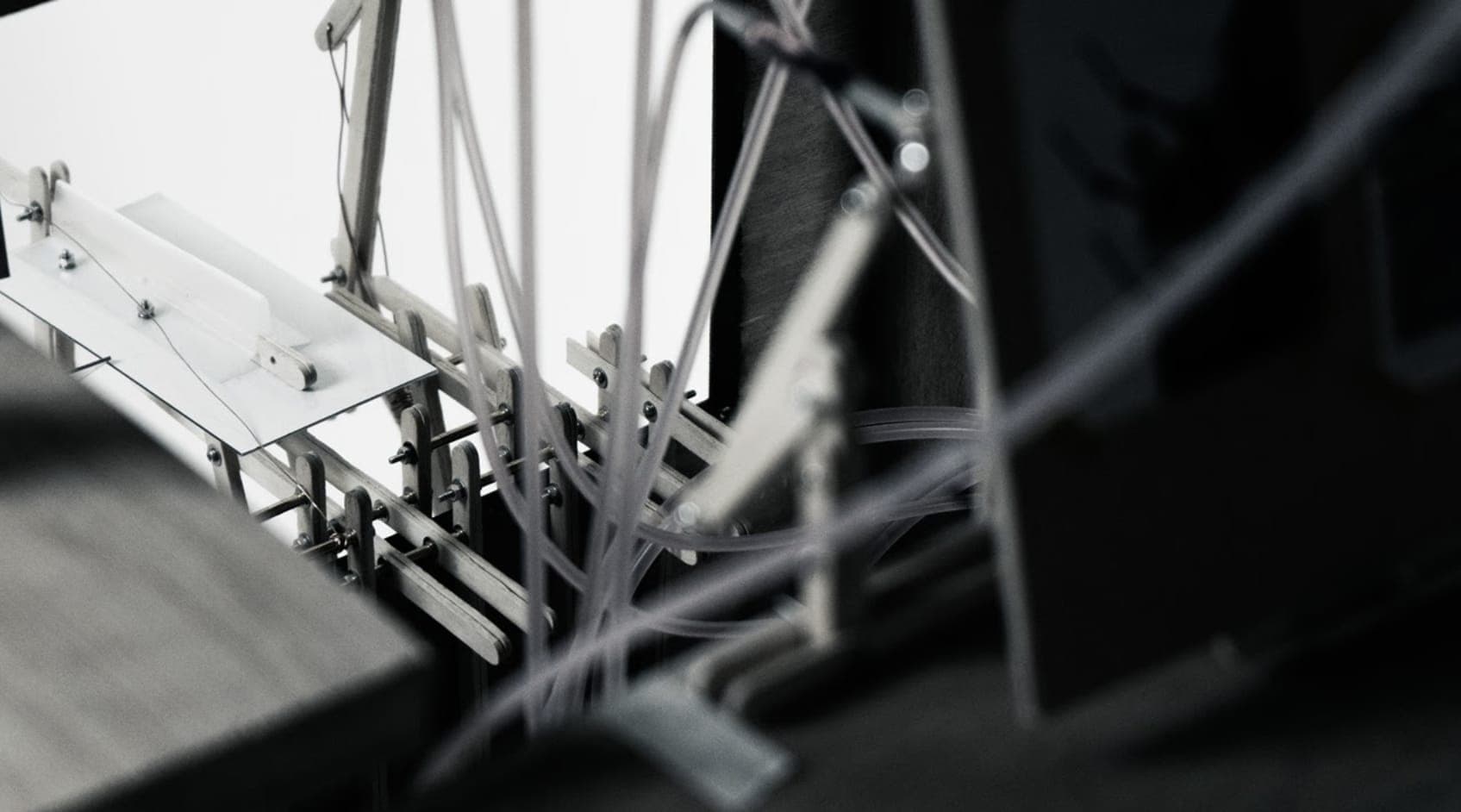
The circuit crossing the host — plastic pipe, wood, and pressure where a wall used to end.
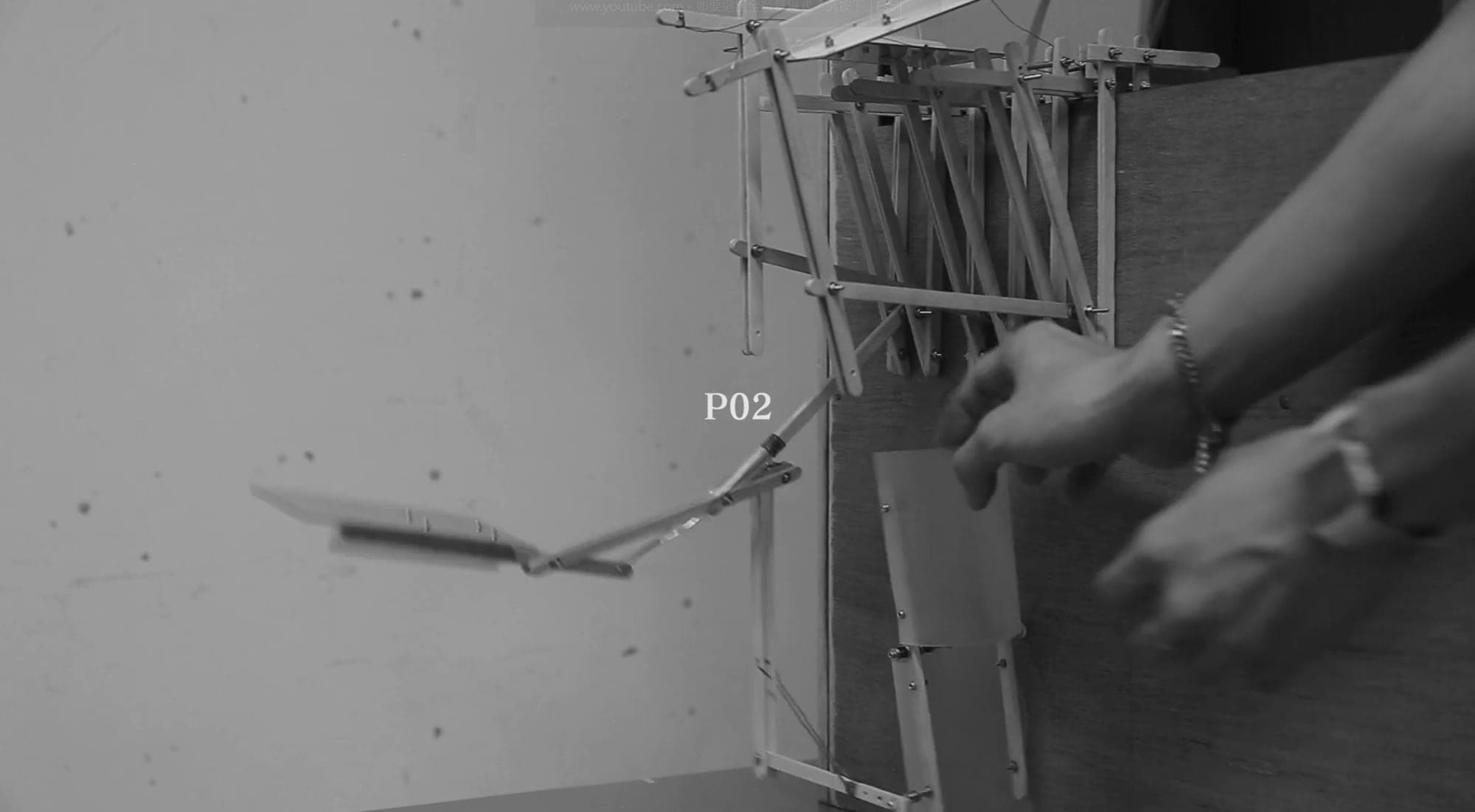
A fully functional 1:10 model demonstrating the design and operation of the parasites: analog mechanisms driven by wind and liquid pressure that transform the configuration of the room — the host — they are installed on.
Occupying an existing condition,not empty ground.
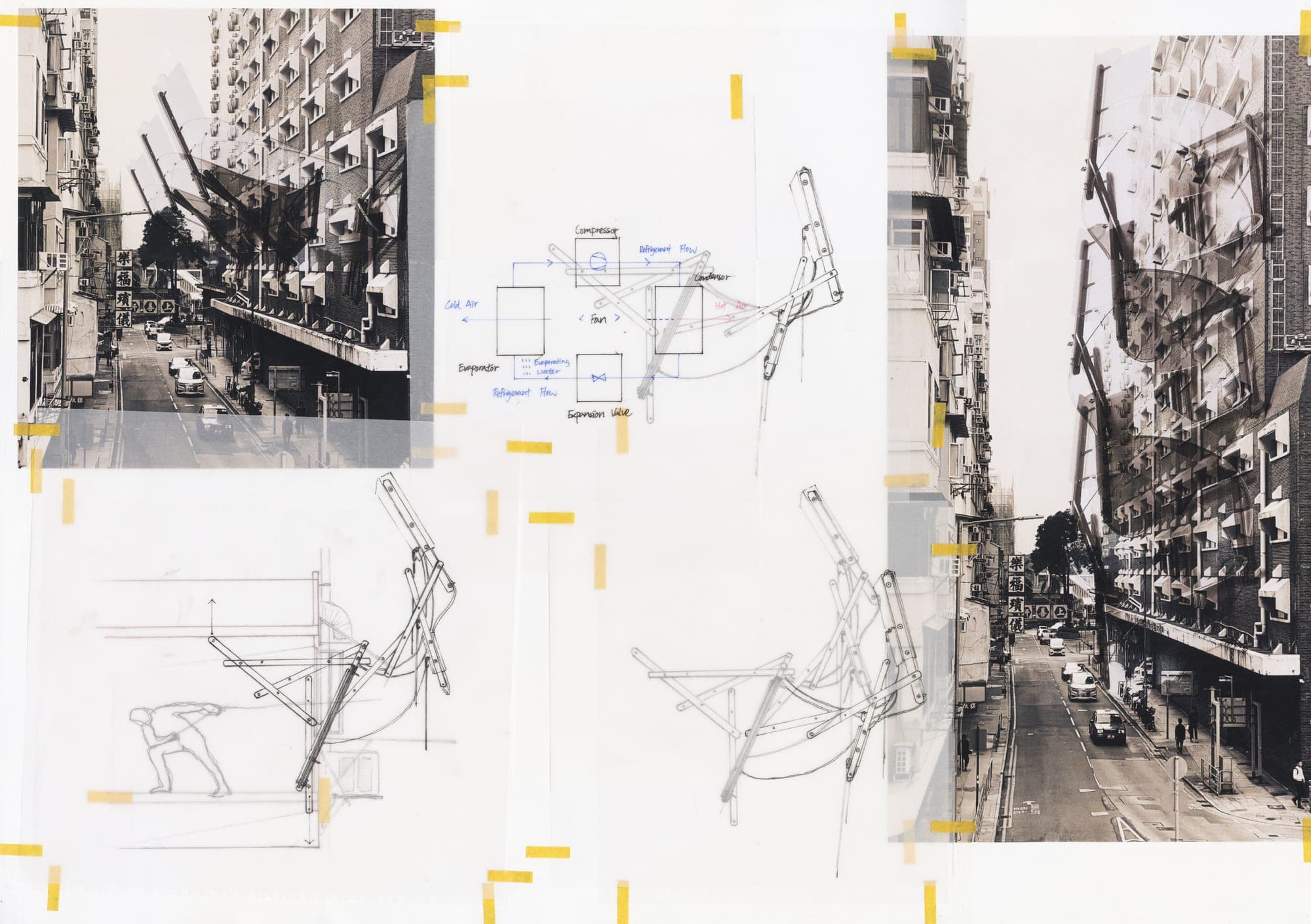
The found precedent — window units already colonize these walls, moving heat with fluid, a fan, and no architecture at all.
In this project, a parasite is any analog mechanism installed onto the existing built structure. The first one was found, not designed: the air-conditioner's refrigerant loop, sketched over the street corner, became the model's energy diagram.
No motors, no controls —wind and water do the work.
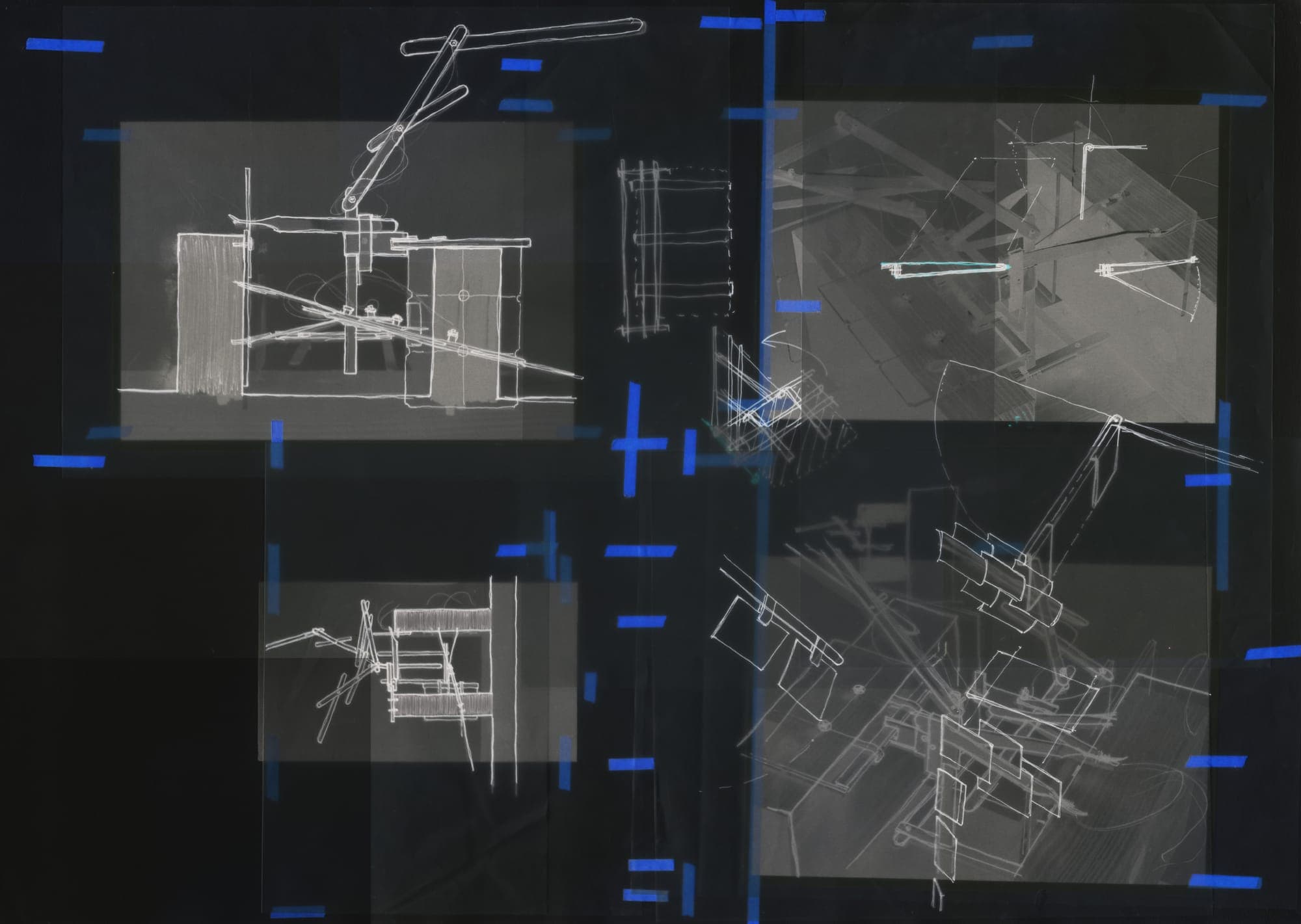
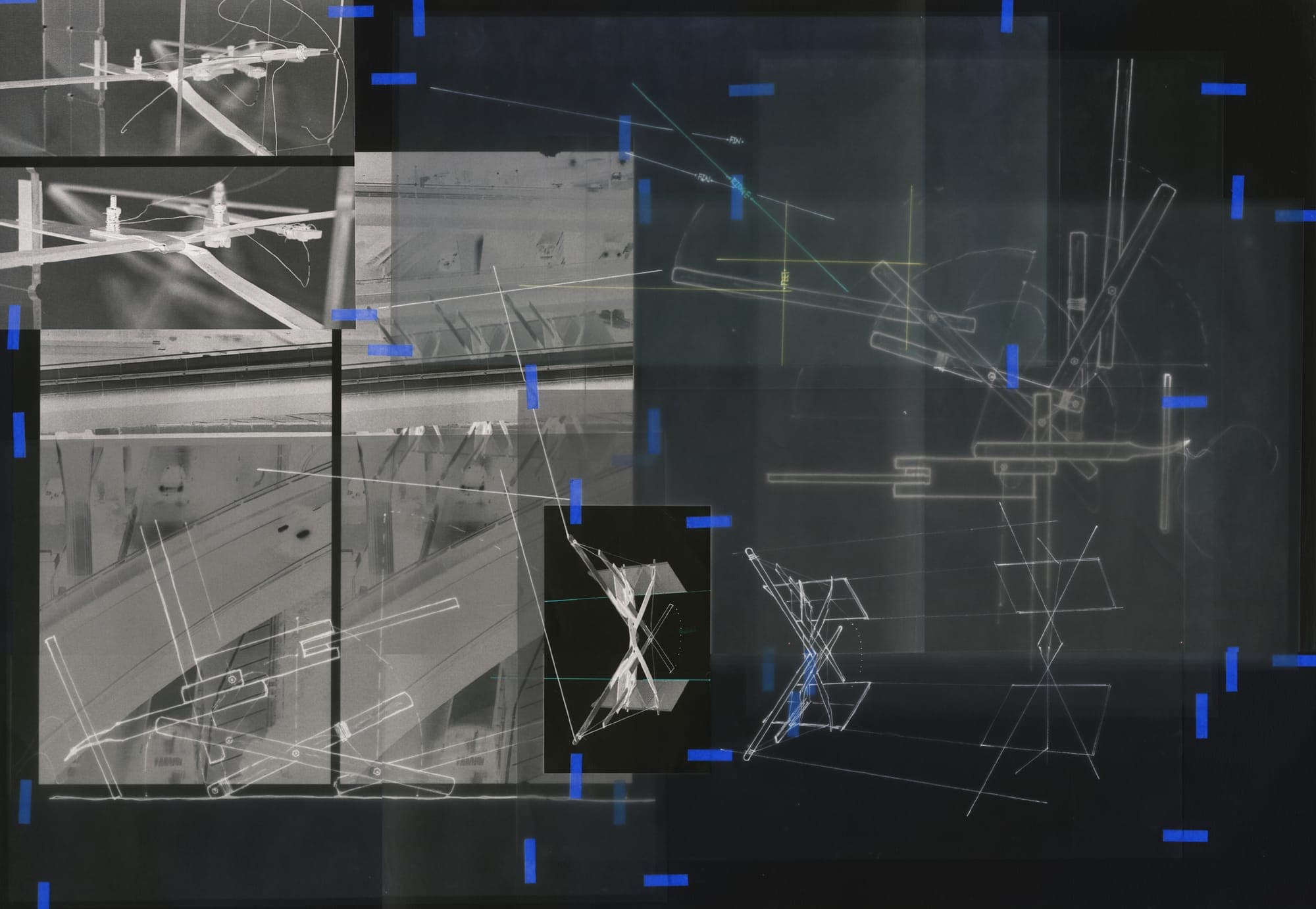
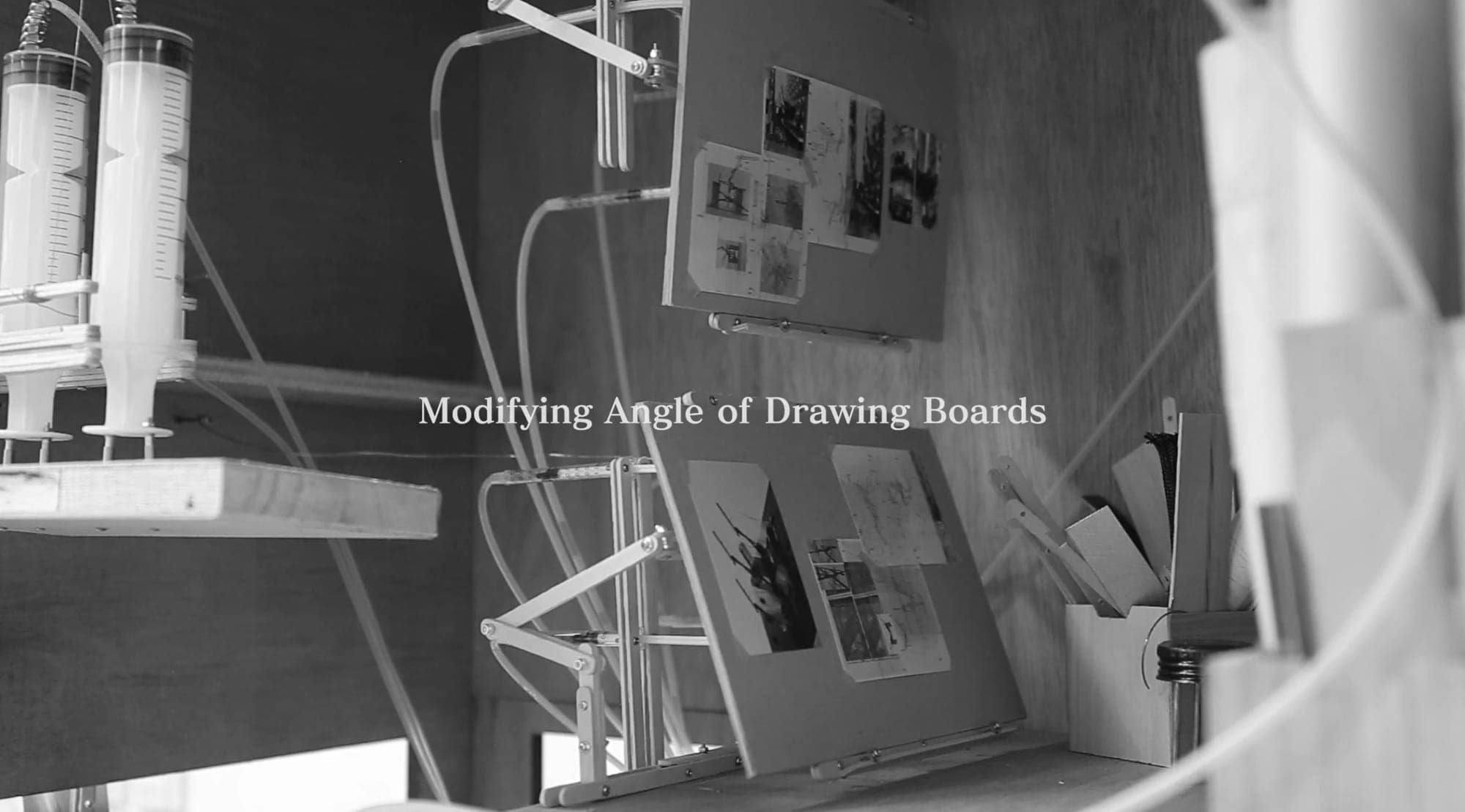
Study boards — parasites drafted in white over photographs of model and host, taped like film leader.
The energy-transport system borrows from Bernoulli's principle and pneumatics: two syringes connected by plastic pipes carry pressure captured where the wind blows and release it where the room needs to move.
Pressure in,and the room reconfigures.
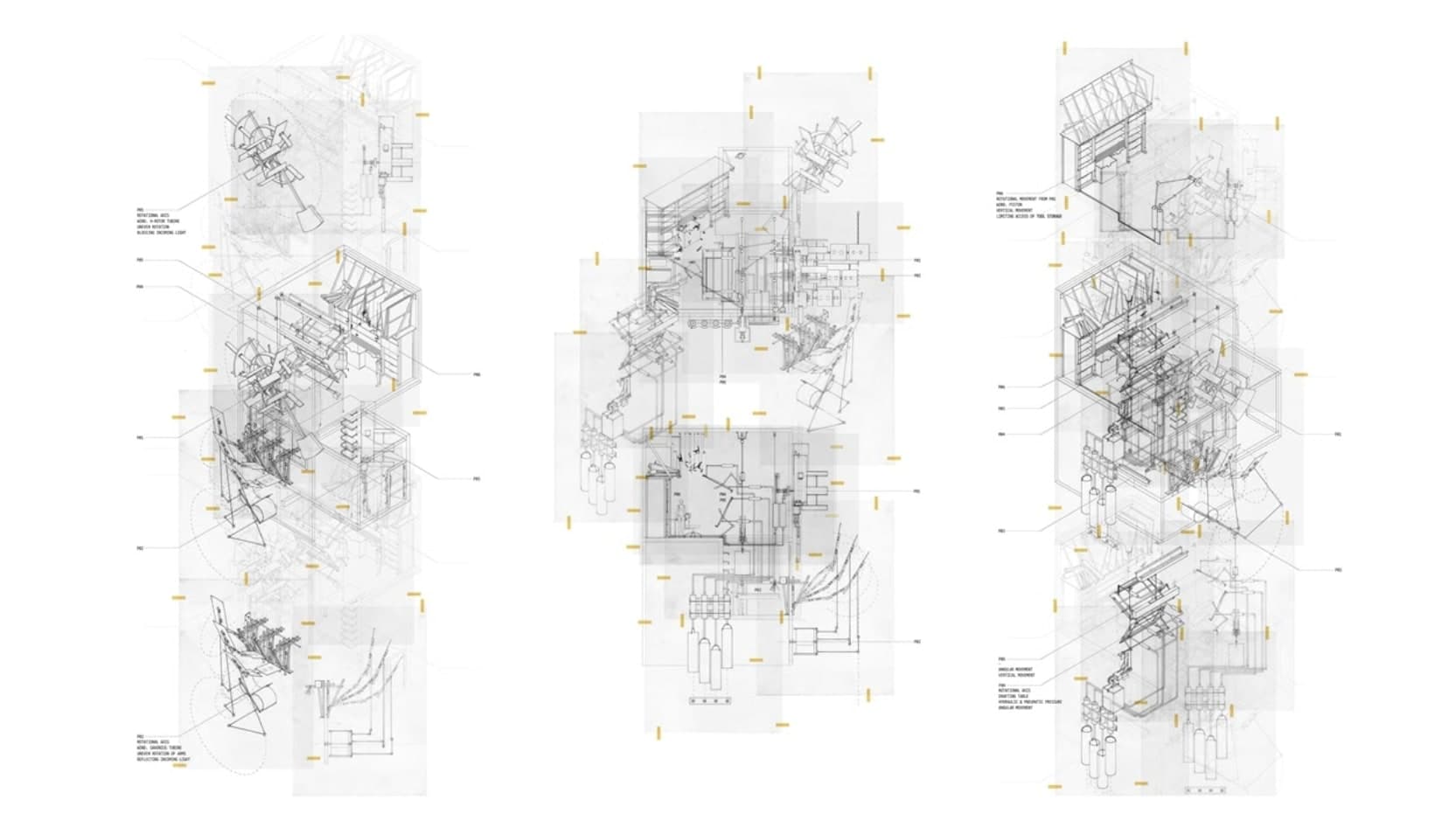
Every parasite on one sheet — axes, rotors, pistons, and the movements they feed, annotated in the margin.
Wind rotors (an H-rotor and a Savonius turbine) drive the rotational axes; syringes and pistons carry the pressure lines; the drafting table tilts on hydraulic and pneumatic movement. Read top to bottom, the score maps each attachment P01–P06 to the reconfiguration it performs on the host.